Thursday, March 7, 2019
malnutrition and cancer Prevention control of malnutrition, st is cancer. Malnutrition in Cancer Patients
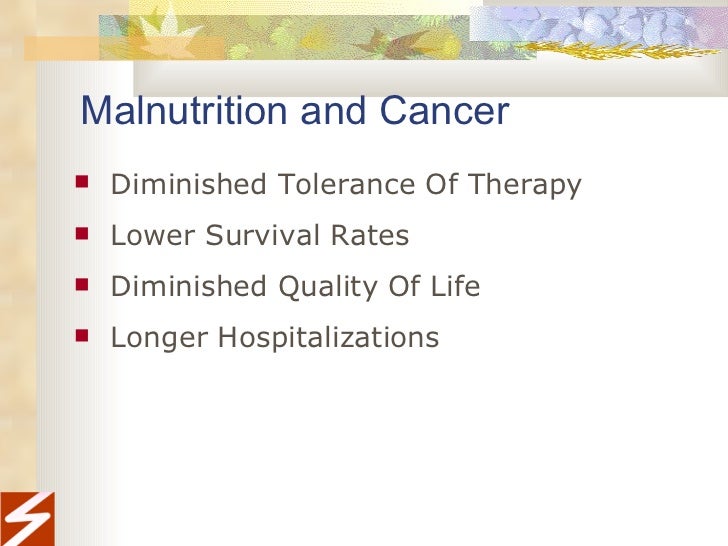
Cancer is definitely a powerful disease, and it needs a potent treatment regimen to manage and hopefully eradicate the malignant cells. However, cancer treatment itself is extremely damaging towards the body, also it can make an individual very weak. Thus, it is important for cancer patients to address the malnutrition that usually has come about as a consequence of treatment as a way to stay strong.
When you take in, consume the vitamins, minerals, proteins, carbohydrates, as well as other products which the body needs for fuel. This supports your body's defence mechanism in addition to overall health, which enables you to address the cancer. Frustratingly, though, just like someone needs this strength essentially the most, the cancer and subsequent treatment may cause you to develop anorexia or cachexia.

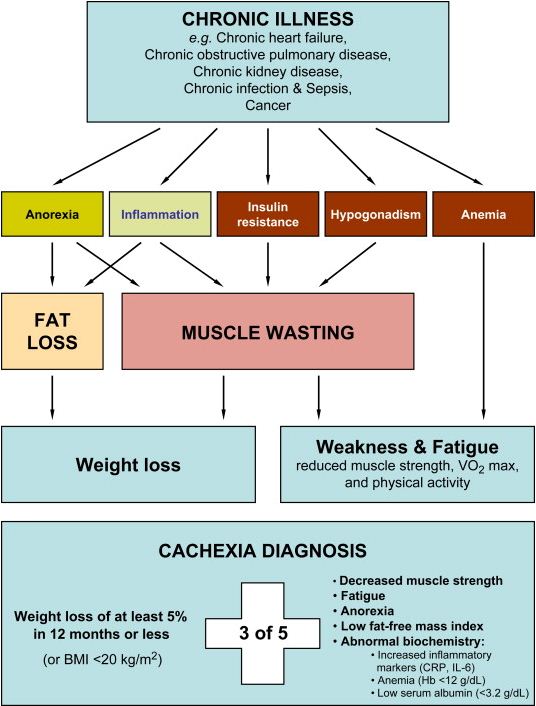
One of essentially the most frequent signs of cancer is anorexia, or complete decrease of appetite. This can occur since the body loses its ability smell or taste as a result of cancer treatment, or it can happen as tumors grow and put pressure on digestive organs. Cachexia, alternatively, is often a wasting disease seen as an loss of body mass. Normally, the body is able to accommodate starvation or anorexia by slowing down its metabolism. However, with cachexia, the metabolism is not able to adjust, which forces one's body to consume its own fat and muscle. Cachexia most often occurs with lung and digestive cancers.

Frustratingly, both anorexia and cachexia can result in malnutrition as your system no longer contains the nutrients which it needs to withstand cancer and cancer treatment. Malnutrition could make you more susceptible to infections, as well as the treatment itself may become too risky for your body. You may also feel fatigued and weak, which decreases what you can do to address your cancer.
To aid the prevention of malnutrition, many cancer doctors include nutritional counseling and therapy. This can coach you on the way to get essentially the most nutrients out from the food that you are able to use.
If you are identified as having mesothelioma, you will need additional support in managing and dealing with the medial side connection between devastating disease, including cachexia and anorexia. To learn more about mesothelioma, please visit the Mesothelioma Resource Center today.
One of essentially the most frequent signs of cancer is anorexia, or complete decrease of appetite. This can occur since the body loses its ability smell or taste as a result of cancer treatment, or it can happen as tumors grow and put pressure on digestive organs. Cachexia, alternatively, is often a wasting disease seen as an loss of body mass. Normally, the body is able to accommodate starvation or anorexia by slowing down its metabolism. However, with cachexia, the metabolism is not able to adjust, which forces one's body to consume its own fat and muscle. Cachexia most often occurs with lung and digestive cancers.
Frustratingly, both anorexia and cachexia can result in malnutrition as your system no longer contains the nutrients which it needs to withstand cancer and cancer treatment. Malnutrition could make you more susceptible to infections, as well as the treatment itself may become too risky for your body. You may also feel fatigued and weak, which decreases what you can do to address your cancer.
To aid the prevention of malnutrition, many cancer doctors include nutritional counseling and therapy. This can coach you on the way to get essentially the most nutrients out from the food that you are able to use.
If you are identified as having mesothelioma, you will need additional support in managing and dealing with the medial side connection between devastating disease, including cachexia and anorexia. To learn more about mesothelioma, please visit the Mesothelioma Resource Center today.