Is Diabetes Considered A Disability? Navigating Your Rights and Benefits
If you or a loved one manages diabetes, this question is likely at the forefront of your mind: Is Diabetes Considered A Disability? It's a crucial question, especially when dealing with work accommodations, healthcare access, or financial support.
The short answer is complex: While a diagnosis of diabetes alone doesn't automatically qualify as a disability, the condition's severity, complications, and impact on your daily life often meet the legal definition under several key US laws. Understanding where you stand requires looking closely at guidelines set by the Americans with Disabilities Act (ADA) and the Social Security Administration (SSA).
This article will break down exactly how diabetes is viewed legally, helping you determine if your specific situation warrants protection, accommodations, or financial assistance.
Understanding Diabetes and Disability Status
When we talk about disability, we must differentiate between an official medical diagnosis and a legal designation. Diabetes, by its nature, is a chronic condition that profoundly affects the endocrine system and requires constant management.
For legal purposes, a condition is often defined as a disability if it "substantially limits one or more major life activities." In the case of diabetes, these major life activities include eating, caring for oneself, and the functioning of the endocrine system itself. Even if your diabetes is controlled with medication or insulin, the necessary ongoing maintenance (testing, diet control, injections) constitutes a major life activity limitation.
Type 1 vs. Type 2: Does the Type Matter?
Legally speaking, the specific type of diabetes (Type 1, Type 2, or Gestational) is less important than the degree of limitation it imposes. However, Type 1 diabetes is often viewed as more inherently limiting.
Type 1 requires continuous, often life-saving intervention and carries an immediate risk of dangerous hyper- or hypoglycemia. Therefore, Type 1 often meets the ADA's definition of disability almost automatically. Conversely, Type 2 diabetes may be more manageable for some, but if it causes severe neuropathy, vision issues, or requires complex medication regimens, it absolutely qualifies as a substantially limiting condition.
What truly matters is the documentation from your medical team showing how frequently and severely your blood sugar levels fluctuate and how this affects your ability to function normally throughout the day.
The Americans with Disabilities Act (ADA) Perspective
The ADA is perhaps the most relevant law for most people asking, "Is Diabetes Considered A Disability?" The ADA protects individuals with disabilities from discrimination in the workplace, state and local government services, public accommodations, and transportation.
Crucially, the ADA Amendments Act of 2008 broadened the definition of disability, making it much easier for people with chronic conditions like diabetes to be covered. The law clearly states that even if medication (like insulin) controls the symptoms, the underlying condition still counts as a disability.
Under the ADA, if you have diabetes, your employer cannot discriminate against you based on that condition. You also have the right to request reasonable accommodations to perform your job safely and effectively.
Meeting the Blue Book Listing for SSDI/SSI
When seeking financial support through Social Security Disability Insurance (SSDI) or Supplemental Security Income (SSI), the criteria are far stricter than those set by the ADA. The Social Security Administration (SSA) uses the "Blue Book" (Listing of Impairments) to define conditions severe enough to prevent an individual from working.
Diabetes Mellitus is listed under Section 9.00, Endocrine Disorders. However, the SSA typically doesn't grant disability benefits based solely on the diabetes diagnosis. Instead, they look at the severe, documented complications arising from poorly controlled or long-term diabetes.
These severe complications must meet specific listings elsewhere in the Blue Book. They usually must demonstrate irreversible organ damage that prevents you from performing Substantial Gainful Activity (SGA).
What if My Diabetes is Managed?
This is where things get tricky, especially for SSDI/SSI applicants. If you are successfully managing your diabetes with treatment and do not have severe end-organ damage, the SSA may determine that you can still work. They evaluate your Residual Functional Capacity (RFC), which is what you can still do despite your impairment.
If your condition is managed but still results in frequent, severe hypoglycemic episodes despite adherence to treatment, you might still qualify. The SSA will consider all evidence, including hospital visits and physician notes detailing the debilitating nature of these episodes.
Social Security Disability Insurance (SSDI) and Supplemental Security Income (SSI)
Applying for SSDI or SSI with diabetes requires showing definitive evidence that your condition prevents you from working for at least 12 months. This is a very high bar to clear.
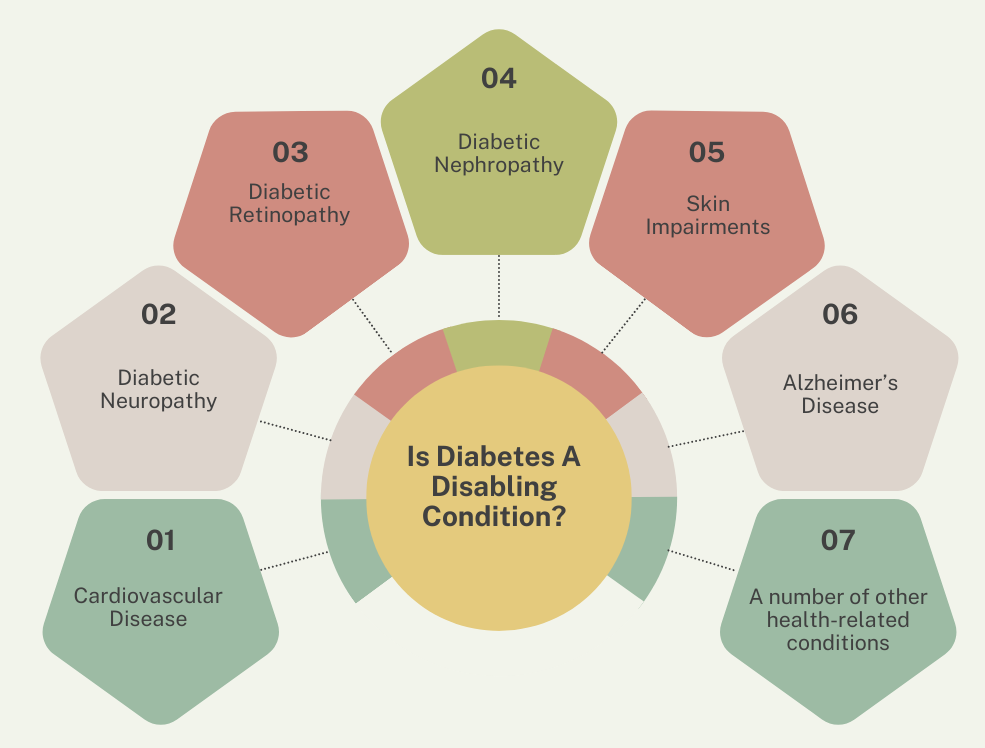
To successfully claim that Is Diabetes Considered A Disability for financial benefits, you must demonstrate permanent, lasting limitations from secondary conditions. These could include:
- Diabetic retinopathy leading to vision loss (meeting the visual impairment listing).
- Diabetic neuropathy causing severe pain, limited mobility, or requiring assistive devices.
- Diabetic nephropathy (kidney failure) requiring dialysis or transplant.
- Cardiovascular issues directly traceable to diabetes.
The application process demands comprehensive medical documentation, including objective testing results (A1C, lab work), hospitalization records, and detailed reports from specialists like endocrinologists and nephrologists.
Navigating Accommodations and Workplace Rights
Since the ADA considers diabetes a disability, you have specific rights in the workplace. If you need adjustments to perform your job due to your diabetes, your employer is required to provide "reasonable accommodations," unless doing so causes "undue hardship" to the business.
This protection is vital for maintaining steady blood sugar control throughout the workday. It's important to open a dialogue with your manager or HR department about your needs.
Remember that reasonable accommodations must be effective, yet they do not have to be the exact accommodation you requested. The goal is to allow you to perform the essential functions of your role safely.
Getting Reasonable Accommodations
Here are common examples of reasonable accommodations requested by employees managing diabetes:
- Flexible Breaks: Being allowed to take brief breaks for blood sugar monitoring, insulin administration, or treating low blood sugar without penalization.
- Access to Supplies: Having immediate access to necessary supplies like sharps containers, refrigerated storage for insulin, or glucose tablets at the workstation.
- Modified Schedules: Adjusting shift times slightly to accommodate medical appointments or managing morning insulin routines.
- Food and Drink: Permission to eat or drink necessary items at the workstation to manage or prevent hypoglycemia.
- Restricted Activity: Temporary relief from tasks that pose a safety risk during a period of unstable control (e.g., driving or operating heavy machinery).
When requesting an accommodation, you usually need documentation from your doctor confirming your condition and explaining why the requested accommodation is necessary for you to safely do your job.
Conclusion: So, Is Diabetes Considered A Disability?
In short: yes, diabetes is generally considered a disability under the expansive protections of the Americans with Disabilities Act (ADA), granting you protection against workplace discrimination and the right to reasonable accommodations. This is true whether you have Type 1 or Type 2.
However, when seeking financial assistance through Social Security Disability Insurance (SSDI) or SSI, the criteria are much stricter. To qualify for financial benefits, you must demonstrate that diabetes has led to severe, permanent complications (like blindness, severe nerve damage, or kidney failure) that prevent you from engaging in substantial work activity. Always prioritize strong, comprehensive medical evidence when pursuing any disability claim regarding whether Is Diabetes Considered A Disability in your specific case.
Frequently Asked Questions (FAQ)
- Can I be fired for having diabetes?
- No. The ADA prohibits employers from discriminating against qualified employees based on disability. If you can perform the essential functions of the job, with or without reasonable accommodations, you cannot be terminated solely because you have diabetes.
- Does the severity of my A1C determine if I am considered disabled?
- Not directly. While a high A1C indicates poor control and risk of complication, legal disability status (especially for SSDI) focuses on the resulting functional limitations. However, fluctuating A1C combined with records of frequent severe hypoglycemic events can strongly support a disability claim.
- Do I have to tell my employer that I have diabetes?
- No, you are not legally required to disclose your diagnosis. However, if you need reasonable accommodations to manage your condition safely in the workplace, you must disclose the condition and request the accommodation through HR or your manager.
- Can I get disability benefits for pre-diabetes?
- It is highly unlikely. Pre-diabetes rarely meets the legal definition of "substantially limiting" a major life activity, and almost certainly would not meet the SSA's strict requirements for an inability to work.
Is Diabetes Considered A Disability
Is Diabetes Considered A Disability Wallpapers
Collection of is diabetes considered a disability wallpapers for your desktop and mobile devices.

High-Quality Is Diabetes Considered A Disability Capture Digital Art
Discover an amazing is diabetes considered a disability background image, ideal for personalizing your devices with vibrant colors and intricate designs.

High-Quality Is Diabetes Considered A Disability Abstract Photography
Discover an amazing is diabetes considered a disability background image, ideal for personalizing your devices with vibrant colors and intricate designs.

Stunning Is Diabetes Considered A Disability Photo Concept
Immerse yourself in the stunning details of this beautiful is diabetes considered a disability wallpaper, designed for a captivating visual experience.
Gorgeous Is Diabetes Considered A Disability Design Collection
Immerse yourself in the stunning details of this beautiful is diabetes considered a disability wallpaper, designed for a captivating visual experience.
Vivid Is Diabetes Considered A Disability Landscape Collection
Transform your screen with this vivid is diabetes considered a disability artwork, a true masterpiece of digital design.

Mesmerizing Is Diabetes Considered A Disability Scene Digital Art
Discover an amazing is diabetes considered a disability background image, ideal for personalizing your devices with vibrant colors and intricate designs.

High-Quality Is Diabetes Considered A Disability Scene Art
Transform your screen with this vivid is diabetes considered a disability artwork, a true masterpiece of digital design.

Vivid Is Diabetes Considered A Disability View for Desktop
Experience the crisp clarity of this stunning is diabetes considered a disability image, available in high resolution for all your screens.

Exquisite Is Diabetes Considered A Disability Image Concept
This gorgeous is diabetes considered a disability photo offers a breathtaking view, making it a perfect choice for your next wallpaper.
Crisp Is Diabetes Considered A Disability Scene for Mobile
Find inspiration with this unique is diabetes considered a disability illustration, crafted to provide a fresh look for your background.
Serene Is Diabetes Considered A Disability Artwork Concept
Discover an amazing is diabetes considered a disability background image, ideal for personalizing your devices with vibrant colors and intricate designs.

Mesmerizing Is Diabetes Considered A Disability Landscape Photography
Transform your screen with this vivid is diabetes considered a disability artwork, a true masterpiece of digital design.

Mesmerizing Is Diabetes Considered A Disability Background Collection
Transform your screen with this vivid is diabetes considered a disability artwork, a true masterpiece of digital design.

Amazing Is Diabetes Considered A Disability Moment Art
Explore this high-quality is diabetes considered a disability image, perfect for enhancing your desktop or mobile wallpaper.

Amazing Is Diabetes Considered A Disability View Concept
Explore this high-quality is diabetes considered a disability image, perfect for enhancing your desktop or mobile wallpaper.

Mesmerizing Is Diabetes Considered A Disability Picture Illustration
Experience the crisp clarity of this stunning is diabetes considered a disability image, available in high resolution for all your screens.
Beautiful Is Diabetes Considered A Disability Wallpaper for Your Screen
Transform your screen with this vivid is diabetes considered a disability artwork, a true masterpiece of digital design.

Exquisite Is Diabetes Considered A Disability Background Illustration
A captivating is diabetes considered a disability scene that brings tranquility and beauty to any device.

Lush Is Diabetes Considered A Disability Background for Desktop
This gorgeous is diabetes considered a disability photo offers a breathtaking view, making it a perfect choice for your next wallpaper.

Detailed Is Diabetes Considered A Disability Image Concept
Discover an amazing is diabetes considered a disability background image, ideal for personalizing your devices with vibrant colors and intricate designs.
Download these is diabetes considered a disability wallpapers for free and use them on your desktop or mobile devices.